
Vows That Speak Your Language
Spanish & Bilingual Wedding Ceremonies in New York for couples and families who want ceremony content delivered in Spanish, English, or both languages
Language shapes how vows, blessings, and readings are understood by the people who matter most at your wedding. Cantor Daniel Pincus officiates wedding ceremonies in New York entirely in Spanish or in bilingual English-Spanish formats, ensuring that family members and guests can follow the ceremony in the language they're most comfortable with. You need this service when one or both partners speak Spanish as a first language, when significant portions of your guest list are Spanish-speaking, or when you want to honor Latino or Latin American heritage through language as well as cultural ritual.
Ceremony planning involves deciding whether the entire ceremony will be in Spanish, whether key elements like vows and readings will be presented in both languages, and how translations will be handled so the ceremony flows naturally without feeling repetitive or fragmented. The officiant works with you to personalize vows and readings in the language that feels most authentic to how you communicate as a couple, and ensures that any cultural or religious traditions are explained and enacted in language that resonates with your families.
Request a planning consultation to discuss language preferences, bilingual ceremony structure, and which cultural elements you want integrated into your wedding.
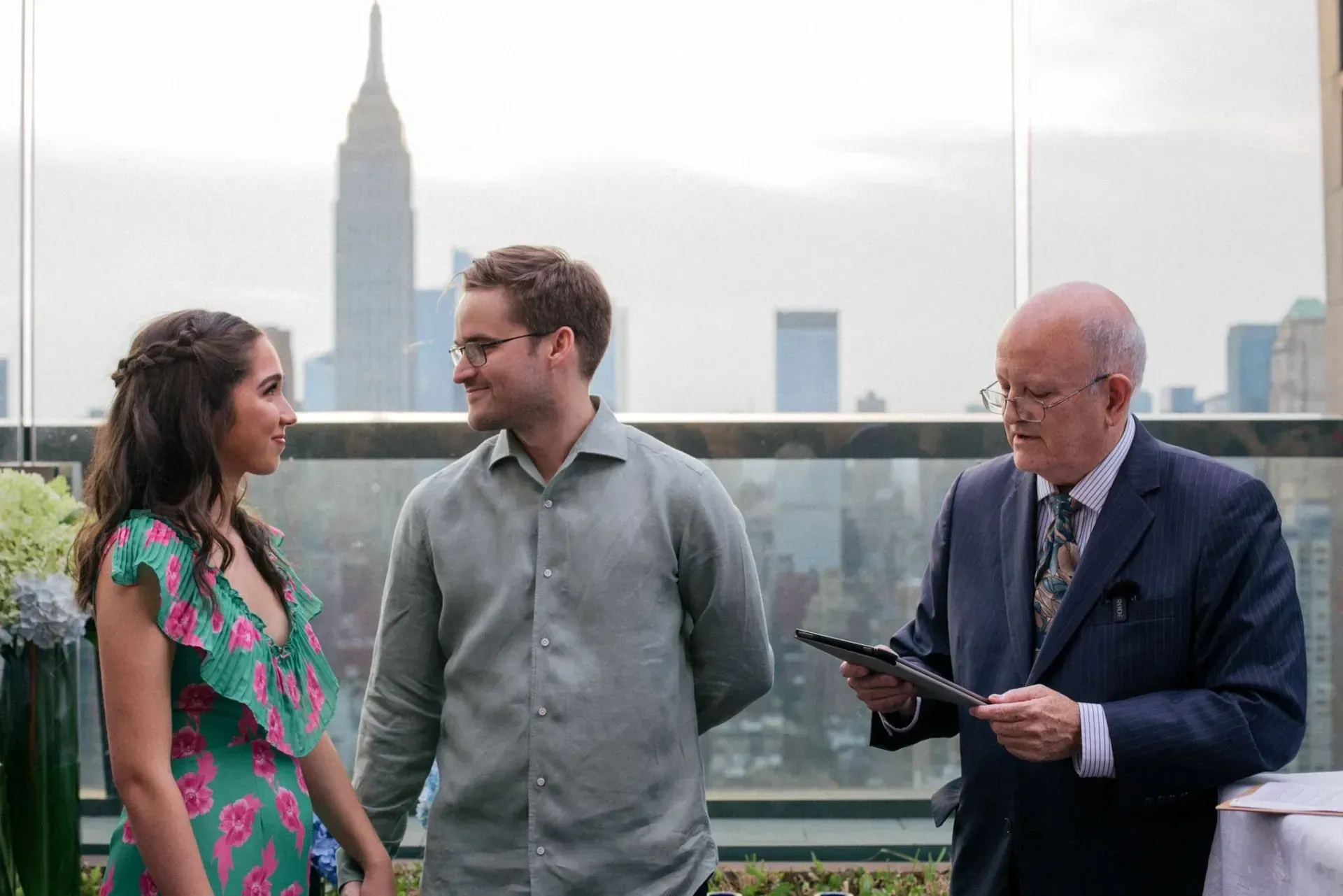
The Difference Between Translation and True Bilingual Ceremony
Preparation includes reviewing ceremony scripts in both languages to ensure that translations convey the same meaning and emotional tone, not just literal word-for-word equivalents. Vows are crafted so they sound natural in Spanish or English, and readings are selected or adapted to work well in both languages if a bilingual format is used. The officiant coordinates with you to determine which parts of the ceremony will be delivered in which language, whether certain blessings or rituals will be presented in Spanish to honor family tradition, and how to ensure all guests feel included regardless of their primary language.
After the ceremony, Spanish-speaking family members will have understood every word without relying on whispered translations from neighbors, and English-speaking guests will have followed the ceremony's meaning and emotional arc even when portions were delivered in Spanish. The ceremony felt cohesive rather than disjointed, and the language choices honored your heritage while making the commitment accessible to everyone present.
Bilingual officiating works for multicultural weddings where families speak different primary languages, for couples who want to honor immigrant parents or grandparents by conducting portions of the ceremony in Spanish, and for destination weddings in Latin America or Spain where a New York-based officiant is desired. The service includes guidance on which ceremony elements translate well, how to handle legal language required by New York State, and support in creating a ceremony where language enhances rather than complicates the celebration.
Questions Before Starting Your Project
Couples planning bilingual or Spanish-language weddings in New York often ask about how to structure the ceremony, which elements should be in which language, and how to ensure all guests stay engaged.
How is a bilingual ceremony structured to avoid repetition?
Key elements like vows, ring exchanges, and pronouncement are often delivered in both languages, while readings, blessings, and explanatory content are divided by language to avoid making the ceremony feel twice as long, with each language carrying full meaning rather than one being a mere echo of the other.
Can we write our own vows in Spanish?
Yes, personalized vows can be written entirely in Spanish, in English, or in both languages depending on what feels most authentic to how you communicate, and the officiant helps refine the language so it sounds natural and carries the emotional weight you intend.
What if only one partner speaks Spanish fluently?
The ceremony can be structured so the Spanish-speaking partner delivers their vows in Spanish while the other uses English, or the entire ceremony can be presented bilingually so both families understand everything, with the officiant adjusting the balance of each language based on guest demographics.
How do you handle cultural traditions specific to Latino weddings?
Traditions like lazo, arras, or specific blessings are incorporated with explanations in both languages when needed, and the officiant works with you to determine which cultural rituals are meaningful to your families and how they fit within the ceremony timeline.
Do guests need printed translations of the ceremony?
Printed programs with key ceremony elements in both languages help guests follow along, especially during longer readings or prayers, and the officiant provides guidance on which parts of the ceremony benefit from written translation versus which are clear from context and delivery.
Cantor Daniel Pincus ensures that language serves your ceremony rather than complicating it, with Spanish and English used intentionally to honor heritage and include all guests. Contact the office to begin planning a ceremony that reflects your linguistic and cultural identity while meeting New York legal requirements for marriage.