
Tradition Adapted to Your Family's Needs
Jewish Wedding Officiant Services in New York for couples who want a ceremony rooted in Jewish tradition with flexibility for modern values
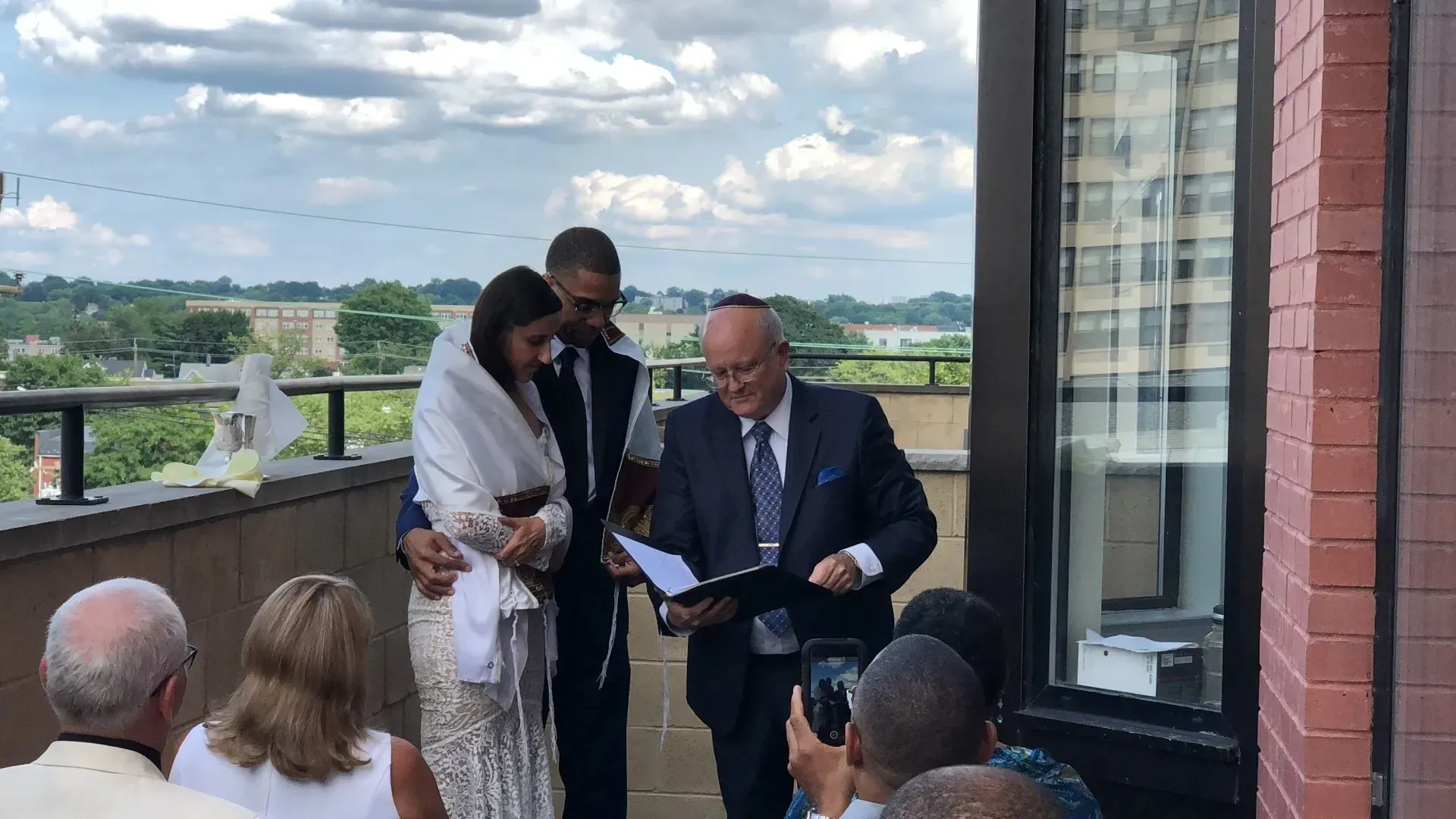
Jewish weddings in New York often require balancing centuries-old ritual with contemporary family structures and personal beliefs. Cantor Daniel Pincus officiates Jewish wedding ceremonies that honor traditional elements like the chuppah, ketubah signing, and Hebrew blessings while allowing customization in language, ritual interpretation, and inclusion of non-Jewish family members. You need this service when you want the recognizable structure of a Jewish wedding but with ceremony content that reflects how you actually live and what you believe.
The ceremony preparation involves reviewing which traditional components you want to include, whether you prefer Hebrew prayers with English translations, how the ketubah text will be personalized, and how family members from different backgrounds can participate meaningfully. The chuppah ceremony itself follows a sequence that includes blessings over wine, ring exchange, reading of the ketubah, the seven blessings, and breaking of the glass, though each element can be adapted in tone and explanation to fit your relationship.
Request a planning session to discuss which Jewish traditions hold meaning for you and how the ceremony structure can honor both heritage and personal values.
How Jewish Ceremony Officiating Addresses Modern Couple Needs
Officiating begins with understanding your connection to Jewish tradition, whether you come from observant families, secular Jewish backgrounds, or one partner is converting or not Jewish at all. The ketubah document is reviewed for language that reflects egalitarian values if desired, and decisions are made about which blessings will be recited in Hebrew, who will recite them, and how their significance will be explained to guests unfamiliar with Jewish weddings.
Once the ceremony concludes, you'll have participated in rituals your family recognizes while hearing words that spoke directly to your relationship, and guests from non-Jewish backgrounds will have understood the meaning behind each ritual because explanations were woven into the ceremony naturally. The ketubah is signed by witnesses in accordance with Jewish law, and the marriage is legally recorded through New York State documentation.
Jewish wedding officiating accommodates interfaith couples who want to honor Jewish heritage without requiring conversion, supports LGBTQ+ couples seeking affirming Jewish ceremonies, and allows family members to take active roles in blessings and readings. The service includes guidance on chuppah logistics, processional order, and how to structure the reception transition after the ceremony.
Common Questions About This Service
Planning a Jewish wedding brings specific questions about ritual requirements, family involvement, and how tradition can be adapted to fit contemporary relationships.
What does the ketubah signing involve?
The ketubah is a Jewish marriage contract signed by two witnesses before or during the ceremony, with text that can be traditional Aramaic, English translation, or custom-written language that reflects egalitarian commitments, and it becomes a meaningful document displayed in your home after the wedding.
How is a chuppah ceremony structured?
The chuppah represents the home you're building together, and the ceremony underneath it includes blessings over wine, exchange of rings with specific Hebrew phrases, reading of the ketubah aloud, the seven blessings often recited by honored guests, and concludes with breaking a glass to commemorate the destruction of the Temple.
Can non-Jewish family members participate in the ceremony?
Yes, non-Jewish relatives and friends can stand under the chuppah, hold the chuppah poles, offer readings or personal blessings, and be included in processional roles, with the officiant helping determine which elements are appropriate for non-Jewish participants.
What happens if only one partner is Jewish?
Interfaith couples can have a Jewish wedding that honors the Jewish partner's heritage while respecting the non-Jewish partner's background, with adjustments made to language, ritual explanation, and the inclusion of cultural elements from both families when desired.
Do we need to use all traditional Hebrew prayers?
No, you choose which Hebrew blessings to include, whether they're recited in Hebrew with English translations provided, or adapted entirely into English, and the ceremony can range from fully traditional to modern and personalized while still maintaining recognizable Jewish structure.
Cantor Daniel Pincus works with couples to determine which Jewish traditions are essential to your ceremony and how to adapt others to reflect your relationship. Begin planning by scheduling a consultation to review ceremony options and family considerations specific to your wedding.