
Two Traditions Honored in One Ceremony
Interfaith Wedding Ceremonies in New York for couples blending different religious or cultural backgrounds into a unified celebration
When partners come from different faith traditions, the ceremony must reflect both backgrounds without diminishing either. You need interfaith wedding officiating when one partner is Jewish and the other is Christian, Muslim, Hindu, Buddhist, or secular, and you want a ceremony that honors both families' expectations while centering your shared commitment. Cantor Daniel Pincus creates interfaith ceremonies in New York that weave together rituals, readings, and blessings from multiple traditions, ensuring that both partners see their heritage represented and that families feel their beliefs are respected.
The planning process involves identifying which religious or cultural elements are non-negotiable for each family, which rituals can be adapted or explained in inclusive language, and where secular or universal language provides common ground. The ceremony might include a chuppah alongside a unity candle, Hebrew blessings paired with Christian scripture, or cultural rituals like a lasso ceremony integrated with Jewish traditions, depending on what combination reflects your families accurately.
Arrange a consultation to discuss which traditions from each background must be included and how to structure a ceremony that honors both families.
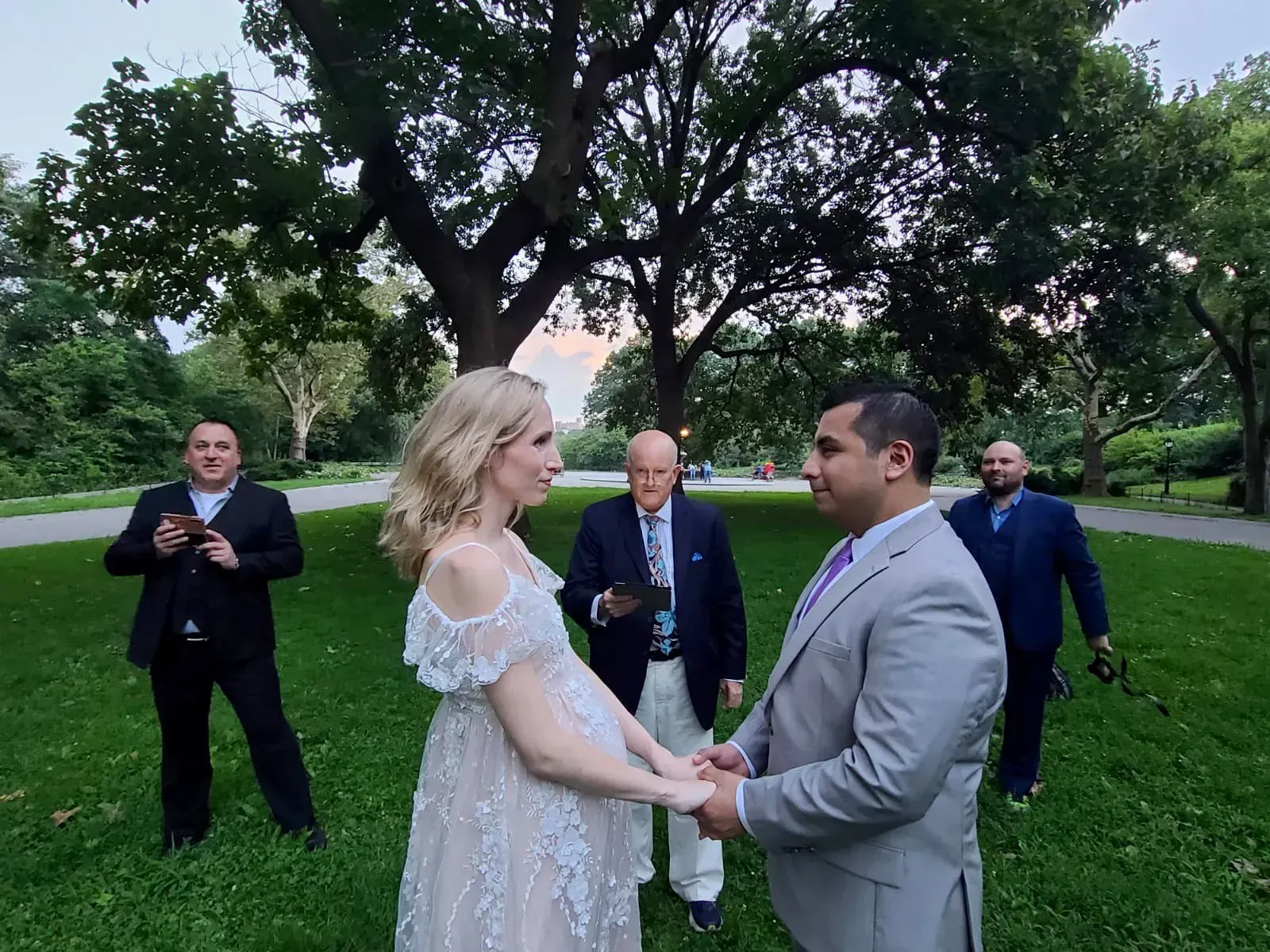
What You Notice Once Ceremony Planning Is Finished
Preparation focuses on understanding what each tradition means to your families and how to present those elements in a way that feels cohesive rather than fragmented. You work with the officiant to select readings that resonate across faith lines, determine which prayers or blessings will be spoken and by whom, and decide how to transition between different ritual moments so the ceremony flows naturally. This often involves collaboration with family members who want to participate, ensuring their contributions fit within the ceremony's overall tone and message.
After the ceremony, both families recognize their traditions in what was spoken and enacted, and guests from different backgrounds understand how the rituals connected to your relationship. The ceremony script balanced religious content with universal themes, and legal marriage requirements were met alongside spiritual or cultural obligations from both traditions.
Interfaith officiating requires sensitivity to theological differences, awareness of which combinations of rituals might conflict, and skill in explaining traditions to guests unfamiliar with them. The service includes guidance on how to navigate family expectations, suggestions for readings that bridge different belief systems, and support in creating a ceremony where neither partner feels their identity is being erased.
Answers to Frequent Service Questions
Couples planning interfaith weddings often ask about how to balance competing expectations, which rituals can coexist, and how families from different backgrounds will respond to the ceremony.
How do you blend two faiths without diluting either?
The ceremony is structured so each tradition is represented through specific rituals, prayers, or blessings that are explained in context, rather than merging traditions into something unrecognizable, and families see their beliefs honored even as they witness practices from another faith.
What if our families have strong religious expectations?
Collaborative planning often involves meeting with family members to understand which elements are essential to them, then finding ways to incorporate those traditions while ensuring the ceremony still reflects the couple's values and relationship, which sometimes requires negotiation and compromise.
Can we include rituals from both faiths in the same ceremony?
Yes, interfaith ceremonies commonly include elements like the Jewish chuppah and breaking of the glass alongside Christian unity candles or readings from the Bible, or Hindu rituals like the saptapadi integrated with Jewish blessings, as long as the rituals don't theologically contradict each other.
What happens if one family is more religious than the other?
The ceremony is calibrated to reflect the level of religious observance each family expects, with more traditional language and ritual for the observant side and more universal or cultural framing for the less religious side, creating balance without favoring one tradition over the other.
How do guests from one tradition respond to rituals from another?
Clear explanations woven into the ceremony help guests understand unfamiliar practices, and the officiant frames each ritual in language that connects to universal themes like commitment, family, and partnership, making the ceremony accessible to everyone present regardless of background.
Cantor Daniel Pincus navigates the complexity of interfaith ceremonies by listening to what each family needs and finding respectful ways to integrate those needs into a ceremony that feels unified. Contact the office to begin planning a ceremony structure that reflects both your backgrounds and meets your families' expectations.